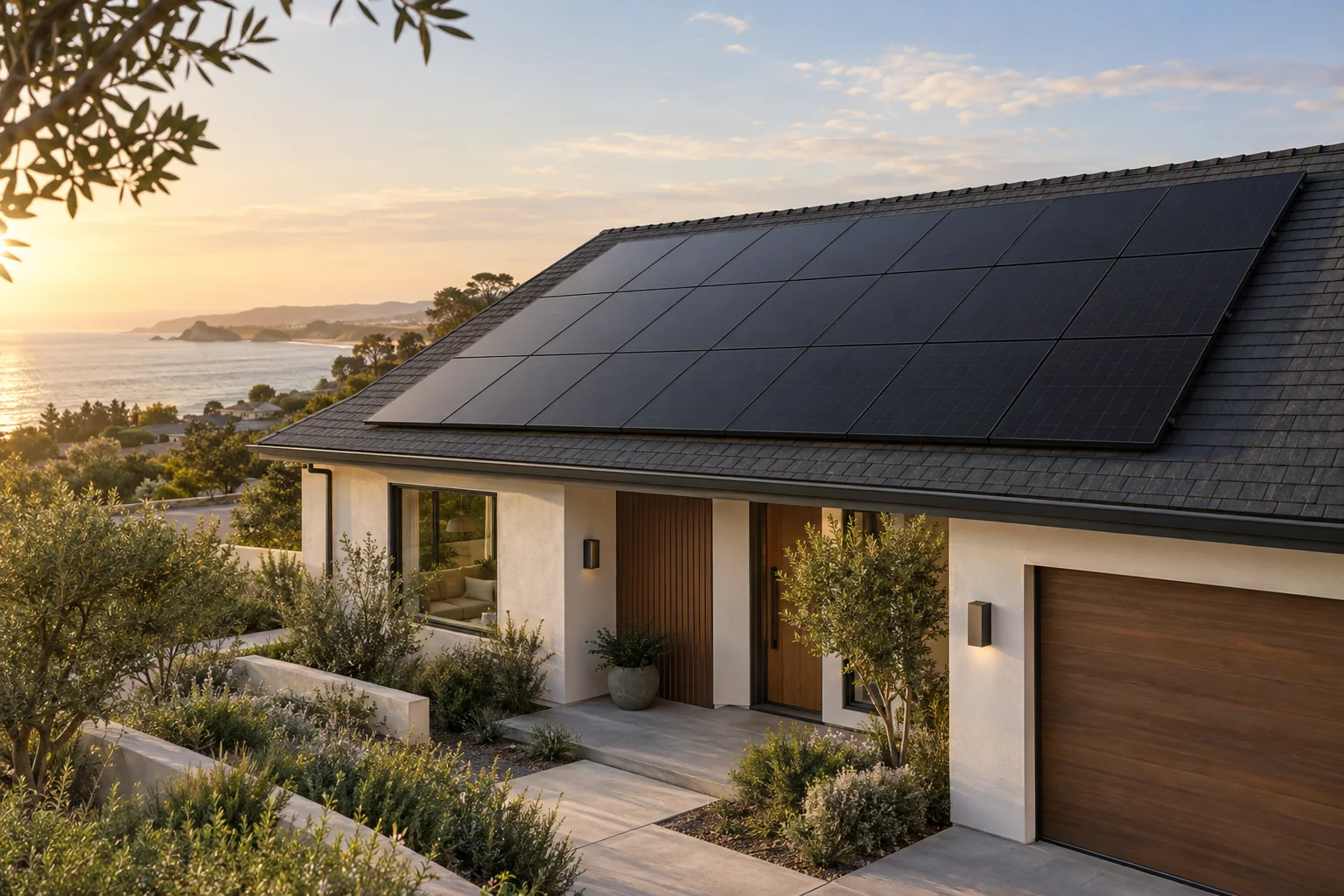
For homes in Florida and California. Start with your address and electricity use.
A DIFFERENT WAY TO POWER HOME.
Your home / Your options
Make it. Store it. Put it to work.
Solar creates electricity. Storage changes when you can use it. EV charging connects that plan to the miles ahead.
01
Solar panels.
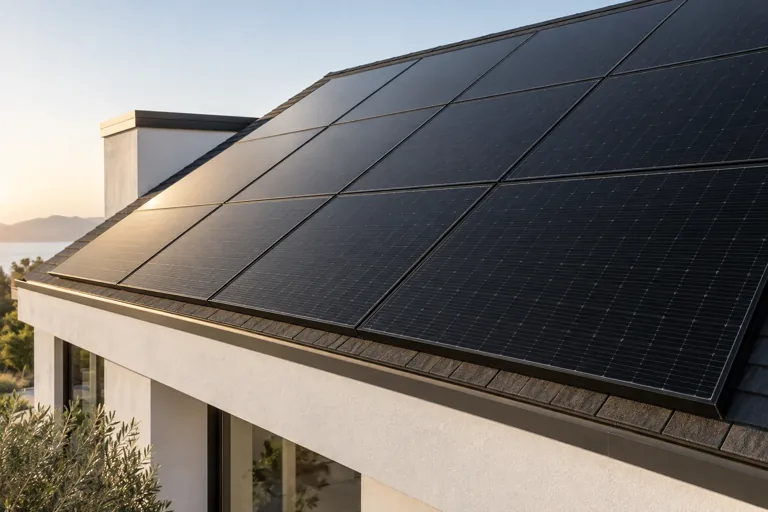
Photovoltaic panels turn sunlight into electricity. An inverter makes that power usable by your home. The system works alongside your utility connection.
What to considerCompare roof space, shading, electricity use and expected generation.
02
Battery storage.
Store energy for use later. Compatible equipment can also support selected circuits during an outage, with capacity and controls designed around your priorities.
What to considerName the loads you want to support and how long you need them.
03
Home EV charging.
Bring charging into your daily routine. Review the vehicle, parking location, electrical service and charging schedule alongside your solar plan.
What to considerDiscuss daily driving, time at home and future electrical upgrades.
The best starting point is your home’s actual use and condition. Bring those details into the first conversation.
01
Bring your electricity bills.
A year of usage helps reveal seasonal patterns. Include planned changes such as an EV, a heat pump or a home addition.
02
Look at the roof first.
Review age, condition, orientation and shade. If replacement is approaching, coordinate it before the panels go up.
03
Compare the complete proposal.
Ask for the equipment list, production assumptions, utility arrangements, electrical work and warranty documents. Keep the estimate tied to your property.
Two small units answer different questions. Knowing the difference makes a solar and battery proposal easier to compare.
kW
How much power, right now?
Kilowatts describe power: the rate of generation or use. A battery’s output rating helps determine which appliances it can run together.
kWh
How much energy, over time?
Kilowatt-hours describe energy generated, used or stored. Usable battery capacity is one factor in how long selected loads can stay on.
What happens in a power outage?
A standard grid-connected solar system generally stops supplying power when the grid fails. Backup needs compatible equipment that safely isolates supported circuits from the grid. Runtime depends on available charge, load and system settings; solar panels alone do not promise whole-home backup.
It depends on your roof, shade, electrical service, electricity use and utility arrangements. VOLT starts with your property and goals, then reviews the proposed system against those details.
Do I need a battery with solar panels?
A battery is a separate design choice. Solar can operate without storage when connected to the grid. Discuss a battery if using energy later or supporting selected loads during outages is a priority.
Can solar keep my entire home running during an outage?
Whole-home backup is not automatic. Ask which circuits are supported, the available output and storage, and any appliance limitations. A backup-capable system needs compatible controls and safe isolation from the utility grid.
Should I replace my roof before installing solar?
Have the roof assessed first. If it needs replacement soon, completing that work before installing panels can avoid a later removal and reinstallation project. Coordinate roof and solar scopes in writing.
Will I still receive an electricity bill?
A grid-connected home can still receive a utility bill. Charges depend on usage, solar production, your rate plan, fixed charges and how the utility treats exported energy. A proposal should make those assumptions clear.
What maintenance and warranties should I review?
Keep the equipment and installation documents together. Review monitoring, inspection or cleaning guidance, the manufacturer’s warranty terms and the written installation warranty. Coverage and exclusions depend on the selected products and project.
Where does VOLT offer solar projects?
VOLT plans solar projects for homes in Florida and California. Share your address so the team can confirm local availability and the scope suitable for your property.
Your home / Your next step
Make room for your own energy.
Tell us where you live, what you use and what you would like to power. We will help you define the next step.