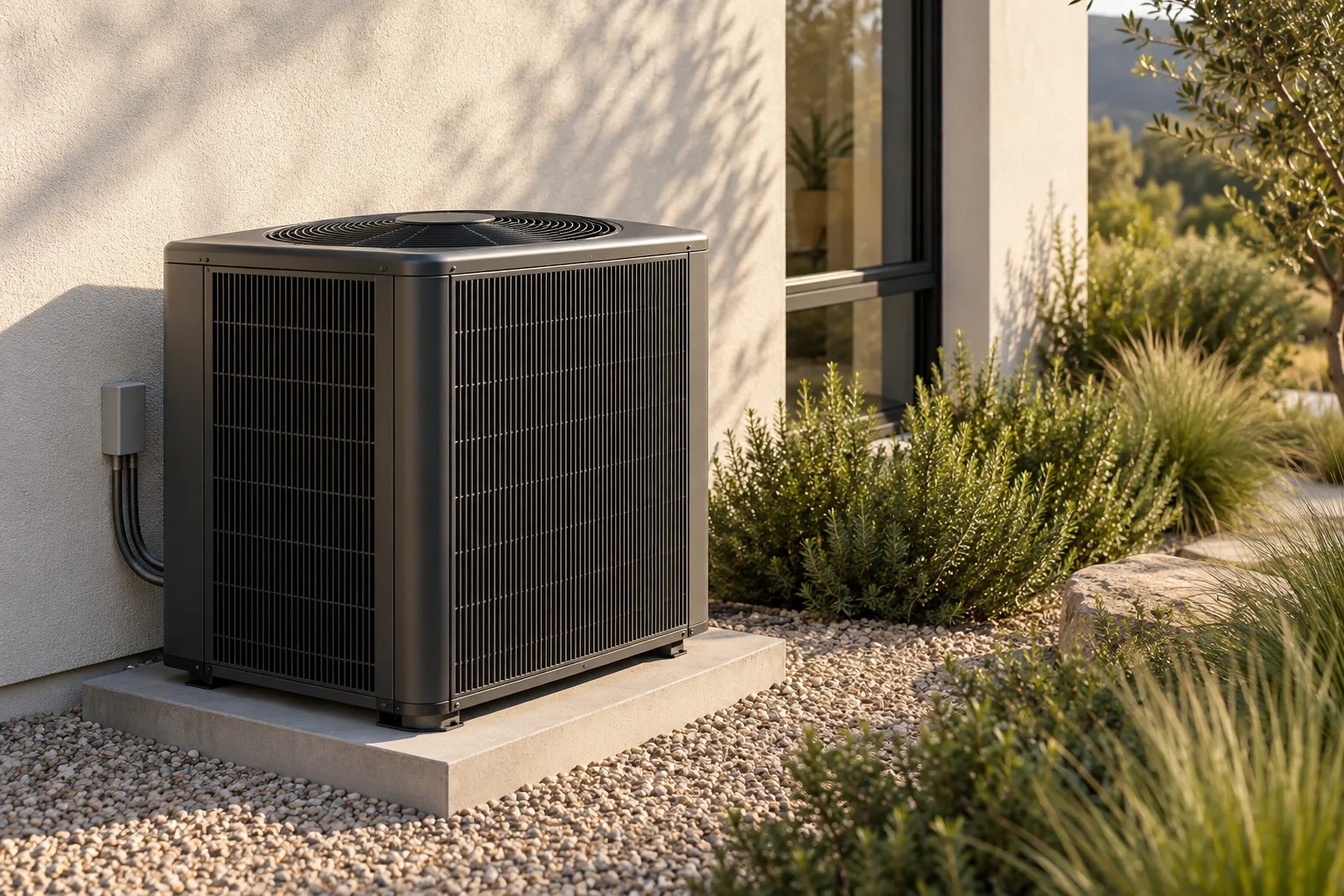
A good fit starts with your home, your climate and the way you live.
COMFORT, CONSIDERED.
Your comfort / Your options
Different systems. One better feeling.
HVAC means heating, ventilation and air conditioning. Start with the spaces you want to improve, then compare the systems that fit.
01
Central air conditioning.
Whole-home cooling through a duct system. A replacement is an opportunity to review airflow, controls and moisture management alongside the equipment.
A starting point forHomes with existing ducts and a cooling system ready for review.
02
Heat pumps. Both seasons.
One electric system for cooling and heating. An air-source heat pump moves heat between your home and the outdoor air as the seasons change.
A starting point forA coordinated heating and cooling upgrade, including a move to electric heat.
03
Ductless. Room by room.
Mini-split systems connect an outdoor unit to indoor units serving specific spaces. They can be an option where adding or extending ducts is impractical.
A starting point forAdditions, rooms without ducts and spaces that need their own control.
A heat pump does more than its name suggests. It can cool your home, too. Here is the idea, without the jargon.
01 / COOLING MODE
Your homeOutdoors
Take the heat outside.
In cooling mode, the system absorbs heat indoors and releases it outdoors. Your living space gets cooler.
02 / HEATING MODE
OutdoorsYour home
Bring warmth back in.
In heating mode, the process reverses. The system gathers heat from the outdoor air and delivers it inside.
What does SEER2 mean?
SEER2 describes seasonal cooling efficiency under standardized test conditions. HSPF2 describes seasonal heating efficiency for heat pumps. Compare ratings for the complete matched system; real energy use also depends on climate, installation and how you use your home. Read ENERGY STAR’s rating definitions.
Comfort is an ongoing relationship
A little care. Season after season.
Keep the conversation going after installation. A maintenance plan should clearly explain the visits, checks and service it includes.
HVAC stands for heating, ventilation and air conditioning. It includes the equipment and air distribution that help manage indoor temperature and air movement. Cooling, moisture control and ventilation should be considered together when planning a home system.
What is the difference between an air conditioner and a heat pump?
Both can move heat out of your home to provide cooling. A heat pump can also reverse the process to provide heating. The right choice depends on your climate, existing heating equipment, electrical capacity and comfort goals.
How do I know what size HVAC system my home needs?
Ask for a heating and cooling load calculation, rather than choosing by floor area or the old unit’s size alone. Insulation, windows, sun exposure, air leakage, local weather and the rooms being served all matter. Ductwork and airflow need review too.
Should I repair or replace my current system?
Start with a diagnosis. Compare the repair scope, equipment condition, repair history, available warranty coverage and a replacement proposal. Uneven temperatures or long run times can also involve ducts, controls or insulation, so replacing the outdoor unit alone may not solve the problem.
How often should an HVAC system be maintained?
Arrange professional seasonal maintenance according to your equipment’s requirements. ENERGY STAR recommends annual pre-season checkups and monthly filter checks. Follow the manufacturer’s filter cleaning or replacement instructions; usage, dust and pets can change how often attention is needed.
Can solar panels power a heat pump?
A heat pump uses electricity, so rooftop solar can offset some of its energy use. The result depends on solar production, heating and cooling demand, and when the system runs. Operation during an outage requires separately designed, compatible backup equipment with enough power and stored energy.
Is HVAC service available at my address?
Contact VOLT with your property address and the type of work you need. Our team will confirm local coverage, the applicable installation scope and scheduling before a project is agreed. VOLT’s Florida and California office contacts are listed below.
Your home / Your next step
Let’s find your comfort zone.
Tell us what feels off, what you would like to improve and where your home is. We will confirm local service availability and the next step.